US advisors have a distinct view of different ETF providers

Each ETF brand has a distinctive identity, research by Fundamental Media shows
Key points:
- US financial advisors not only distinguish ETF providers by their fees, but also by their specialism, reputation and levels of communication
- When it comes to the brands that are front of mind for advisors, one particular brand leads the way by far as the company most associated with ETFs
- A correlation analysis between the brand associations and the propensity to buy shows that ETF providers associated with core strategy and a broad range of solutions, and that are perceived as industry leaders are strongly correlated with propensity to buy
There is a general perception that ETF providers are solely associated with the low cost of their products, but research by Fundamental Media found that US financial advisors also distinguish them by other factors, such as their specialism, reputation and levels of communication.
For the Global Brand Survey, Fundamental Media surveyed 554 financial advisors in the United States during October and November 2021. To understand their perception of ETF providers, we apply our ‘brand equity index’ which was developed in 2016 using a combination of quantitative and qualitative methods along three pillars: brand recall, familiarity and propensity to buy.
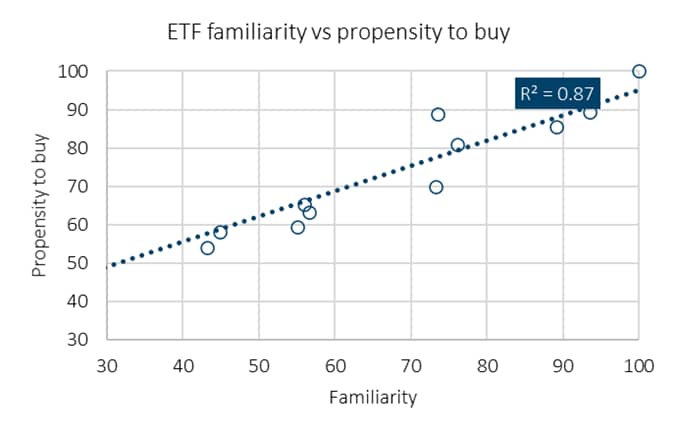
When it comes to the brands that are front of mind for advisors, the brand recognised for its broad product range leads the way as the company most associated with ETFs. However, when we looked at familiarity by prompting specific ETF providers, the differences in how familiar respondents were with the four leading ETF brands were minimal. Familiarity has a stronger positive correlation to propensity to buy than brand recall, which suggests that merely knowing that a company provides ETFs is not enough to drive purchase intentions. In fact, providing investors with a deeper understanding of the company's expertise, values, strategic approach and so on has proven to be a key differentiator in the selection of ETF providers.
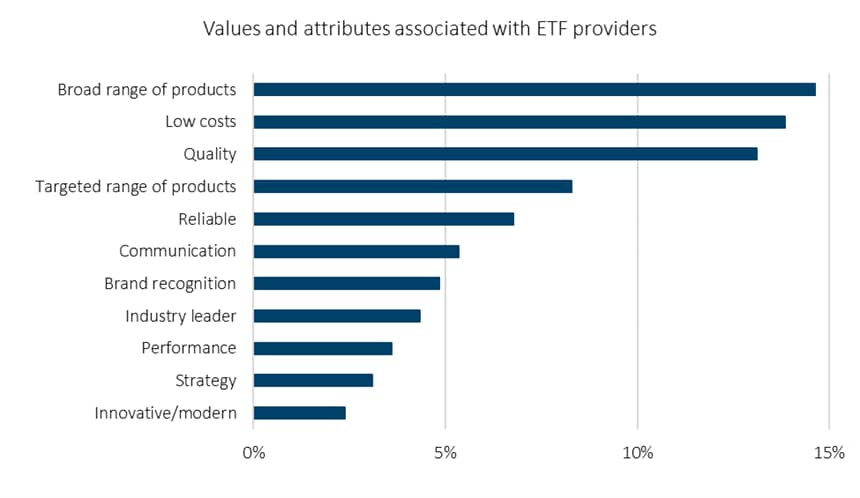
US advisors associated ETF providers mostly with a broad range of products, low fees and their overall quality. However, when looking at the values and attributes associated with leading providers, each company has a distinctive brand identity, with a few standing out for their brand recognition and communication style beyond their broad offering and lower costs.
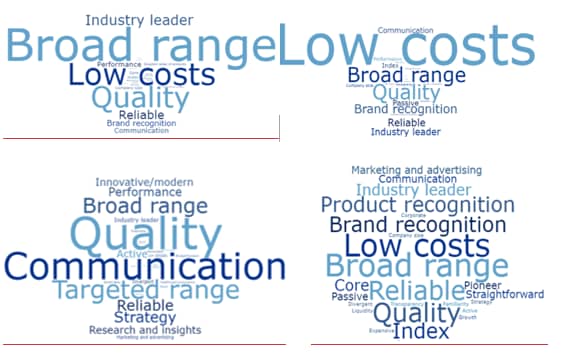
The word clouds show the values and attributes associated with the four leading ETF providers
With US advisors showing the highest use of ETFs across the markets surveyed – over 90% use ETFs regularly in their clients’ portfolios mainly as a core holding or for niche aset classes – it’s interesting to see that not only familiarity and being top of mind are driving propensity to buy, but brand perception as well. So it’s not only about low cost after all.
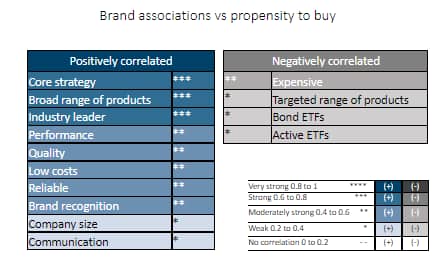
A correlation analysis between the brand associations and the propensity to buy shows that ETF providers associated with core strategy and a broad range of solutions, and that are perceived as industry leaders are strongly correlated with propensity to buy, as opposed to ETF providers associated with high fees and a targeted product range.
With over 48% of US advisors planning an increase in their use of ETFs over the next year, good communication and strategies aiming at increasing familiarity with products and expertise are key to compete in the current market dominated by large, low-cost providers.

Active management leads allocation outlook for intermediaries in Spain
Active management shows the strongest appetite among intermediaries in Spain for the year ahead. Read Aureum Y’s full findings.

How intermediaries in Hong Kong select funds: new survey insights
Investment philosophy is the top fund selection factor among intermediaries in Hong Kong, with brand strength and cost also key. Read Aureum Y's findings.

Local managers rival globals among financial intermediaries in Switzerland
Local Swiss asset managers now match global names for brand familiarity among financial intermediaries in Switzerland. Read Aureum Y's full findings.